The first time I made pizza sauce from scratch, I was standing in my grandmother’s kitchen at seventeen, desperately trying to impress a date who was coming over for dinner. Nonna had left me alone with her cryptic instructions scribbled on a yellowed index card: “Good tomatoes, little garlic, patience.” I remember staring at those three words, panic rising in my chest as I realized I had no idea what constituted “good tomatoes” or how much “little garlic” actually meant.
But something beautiful happened as I began crushing San Marzano tomatoes between my fingers, their sweet juice staining my hands crimson. The kitchen filled with the scent of fresh basil I’d torn too eagerly, releasing its peppery oils into the air. I watched olive oil shimmer in the pan, heard the gentle sizzle as garlic hit the heat, and suddenly understood what Nonna meant about patience. This wasn’t just sauce I was making—it was the foundation of every great pizza memory, the bridge between simple ingredients and something transcendent. That sauce, imperfect as it was, taught me that the best recipes aren’t just about following directions. They’re about understanding how ingredients speak to each other, how time and heat transform the ordinary into the extraordinary.
Table of Contents
What Makes This Pizza Sauce Special
This pizza sauce captures the essence of authentic Italian simplicity while delivering bold, restaurant-quality flavor. Unlike store-bought versions laden with preservatives and excess sugar, this recipe celebrates the pure, concentrated taste of quality tomatoes enhanced with aromatic garlic, fragrant herbs, and just enough seasoning to let each ingredient shine. The secret lies not in complexity, but in technique—how you handle the tomatoes, when you add the herbs, and how you control the heat to develop deep, rich flavors without losing the bright acidity that makes great pizza sauce sing.
Ingredients
Base Sauce:
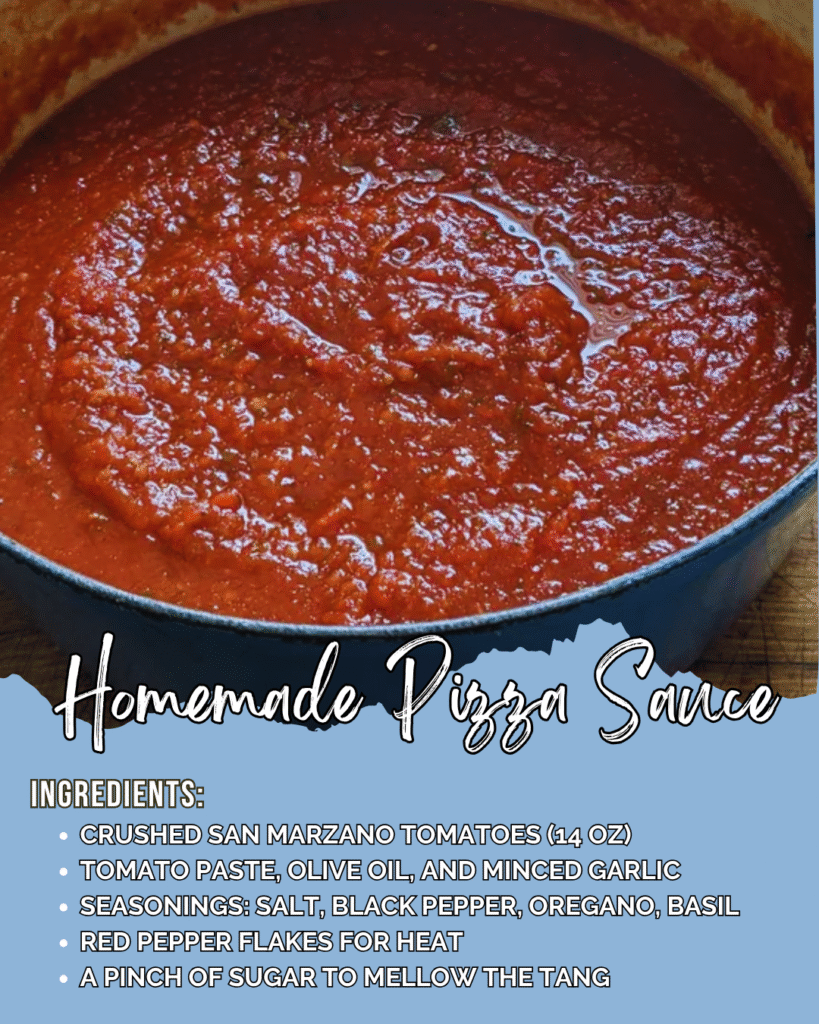
- 1 can (28 oz) whole San Marzano tomatoes, preferably DOP certified
- 3 cloves garlic, minced
- 2 tablespoons extra virgin olive oil
- 1 teaspoon kosher salt
- 1/2 teaspoon freshly ground black pepper
- 1/4 teaspoon red pepper flakes (optional)
Herbs and Aromatics:
- 8-10 fresh basil leaves
- 1 teaspoon dried oregano
- 1/2 teaspoon sugar (only if needed)
Instructions
Begin by opening your can of tomatoes and pouring the contents into a large bowl. This moment always takes me back to that first attempt—the weight of whole tomatoes in your hands, their perfect imperfection. Using clean hands, crush each tomato gently, letting the seeds and juice fall naturally into the bowl. Don’t worry about making this perfect; rustic texture is what we’re after. The slight variations in size will create a sauce with character, where some bites deliver concentrated tomato flavor while others offer smoother, silky texture. Remove any tough stem pieces as you work, but embrace the natural variation in your crushed tomatoes.
Heat your olive oil in a medium saucepan over medium-low heat, watching as it becomes fragrant and shimmers with warmth. The key here is patience—you want the oil hot enough to bloom the garlic’s flavor without burning it. Add the minced garlic and let it dance gently in the oil for about 30 seconds, just until you can smell its sweet aroma filling the kitchen. This is the moment that transforms raw garlic from sharp and aggressive to mellow and welcoming. If you hear violent sizzling, reduce the heat immediately; burnt garlic will turn your entire sauce bitter.
Pour your crushed tomatoes into the pan, and listen for that satisfying sizzle as the cold tomatoes hit the warm oil. This is where the magic truly begins—the marriage of fat and acid that forms the backbone of countless Italian dishes. Add the kosher salt, black pepper, and red pepper flakes if you’re using them. The salt will immediately begin drawing moisture from the tomatoes, intensifying their flavor while the pepper adds depth without overwhelming the delicate tomato taste.
Bring the sauce to a gentle simmer, then reduce the heat to low. This is where Nonna’s wisdom about patience becomes crucial. You want barely perceptible bubbles breaking the surface, not a rolling boil that will cause the tomatoes to break down too quickly and lose their bright flavor. Let the sauce cook for 20-25 minutes, stirring occasionally with a wooden spoon. As it cooks, you’ll notice the color deepening from bright red to a rich, concentrated crimson. The consistency will thicken naturally as excess moisture evaporates, leaving behind pure tomato essence.
During the last five minutes of cooking, add your dried oregano, crushing it between your fingers as it goes into the pot to release maximum flavor. The herbs should bloom in the warm sauce, becoming aromatic and integrated rather than tasting raw or dusty. Taste your sauce now and adjust the seasoning—it should be well-balanced, with the tomatoes’ natural acidity complemented by the salt and herbs, not overwhelmed by them.
Remove the pan from heat and immediately add your fresh basil leaves, tearing them gently with your hands rather than cutting them with a knife. The residual heat will wilt the basil slightly while preserving its bright, peppery notes. This final addition of fresh herbs is what elevates homemade sauce above anything you can buy—that burst of living flavor that only fresh basil can provide.
Let the sauce cool to room temperature before using. This cooling period allows all the flavors to marry and settle, creating a more cohesive taste. If your sauce tastes a bit too acidic after cooling, add the half teaspoon of sugar to balance the natural tartness of the tomatoes. Remember, you’re not making the sauce sweet—you’re just rounding out any sharp edges.
Chef’s Notes
This sauce can be stored in the refrigerator for up to one week or frozen for up to three months. For best results, let it come to room temperature before spreading on your pizza dough. The sauce should be thick enough to spread easily without making the dough soggy, but not so thick it won’t distribute evenly. If freezing, consider portioning it into ice cube trays for convenient single-serving portions. For variation, try adding a splash of good red wine during cooking, or experiment with different herbs like fresh thyme or marjoram.
Servings: Makes enough sauce for 3-4 medium pizzas
Total Time: 35 minutes